

Leaving the left bank of Kitaura in Kashima City slightly behind, and running along the base of a hill, I was inexplicably drawn to a narrow, dark uphill path. What could be beyond this? Where does it lead? The joy of running lies in the freedom to choose your destination.
Upon reaching the top of the damp slope, I found myself behind the water purification plant of the Ibaraki Prefectural Enterprise Bureau's Rokko Waterworks Office. As I continued, I encountered a spot that made me exclaim, "Oh!"

Through a narrow gap in the woods at the edge of the plateau, I could faintly glimpse Kitaura! While not exactly a spectacular view, it brought a fresh sense of surprise. Accidentally stumbling upon such a place feels like finding a treasure.
Further on, I encountered the Meotozuka Kofun, one of the Miyachuno Kofun cluster. It is said to be the largest among over 100 tumuli in the cluster, a zempō-kōenfun (keyhole-shaped tomb mound) with a total length of 107.5 meters, built in the 6th century. So that narrow slope led here. I'm familiar with this area.
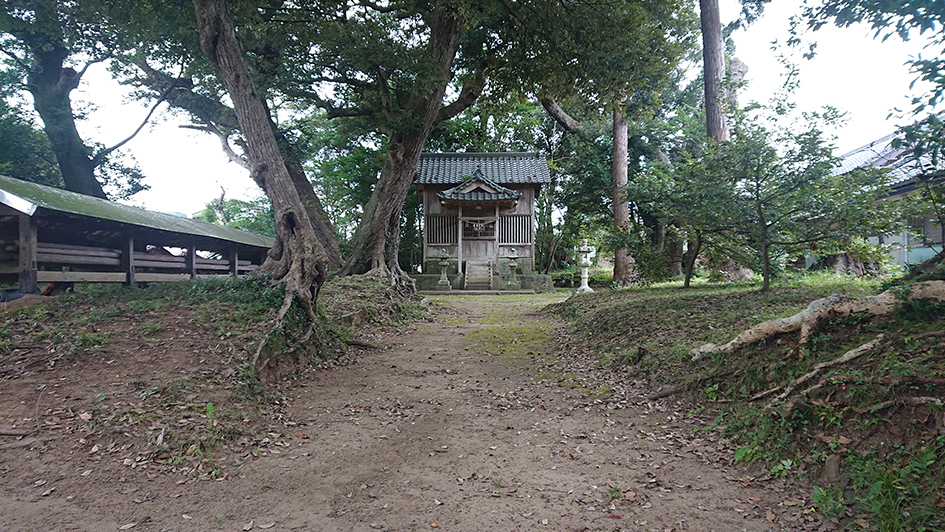
Leaving the kofun, and heading down towards Toyosato Elementary School, stands the Suijinsha shrine. The tranquil atmosphere surrounding the small shrine, dedicated to Mizuhayame-no-mikoto, the goddess of water transport, soothes my mind.
When in this area (Suga, Kashima City), one must visit the tomb of the sword saint, Tsukahara Bokuden.

Bokuden, the founder of the Kashima Shintō-ryū school of ancient martial arts, who also instructed Ashikaga Yoshiteru, Yamamoto Kansuke, and Hosokawa Yūsai, passed away in his hometown of Kashima in 1571. His tomb is located on a small hill at the site of Baika-ji Temple. Even if you're not a runner, it's worth a visit to reflect on the Sengoku period.
Looking down from Bokuden's tomb, I can see a lush, guardian forest in the rice paddies below. When I walk over, it turns out to be the Shusse Inari Shrine. Right next to the sacred grounds is an old-fashioned hand-pump well for disaster use. All of it together makes for a truly fascinating experience.


If I were traveling by car, I would probably miss these things. Even by bicycle, I might hesitate to stop. Because I'm running freely with my own two feet, I can stop at any interesting spot that catches my eye.
Now at 58, running has little to do with training. It's a leisurely run to maintain minimum leg strength, so if I find a pleasant spot, I take a short break. For this kind of enjoyment, this area seems perfect.
Text and Photos: Yoshida (Community Relations Team)